Wine has a vocabulary problem. The words are useful, but people use them like a test you did not study for. Tannin. Terroir. Structure. A dry wine that tastes like fruit.
None of it is complicated once someone says it out loud next to the glass it describes. That is the difference between reading wine tasting terms and hearing them from a sommelier while you drink something made two ports back.
Who Is Master Sommelier Peter Neptune?
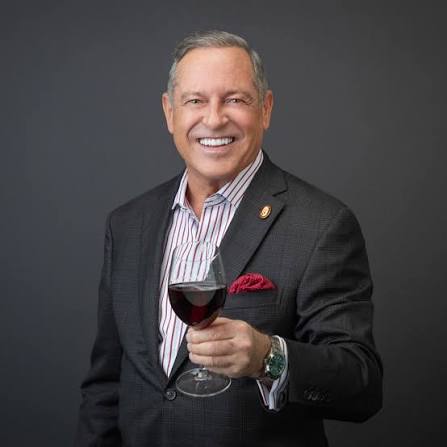
Peter Neptune sails with Atlas Ocean Voyages as a Featured Vintner. He is one of only 279 Master Sommeliers worldwide.
Born in Newport Beach, California, he is a 40-year veteran of the wine business. He began as a sommelier in New York City, where he trained and worked for 10 years, then returned to California and moved into wine education full-time. He founded the Neptune School of Wine and reaches a wide audience through his YouTube channel.
The teaching background matters more than the credential here. Four decades in the wine industry, plus a second career built on teaching it, is what turns a tasting into something you can follow.
Terms That Describe How a Wine Feels
Tannin
Tannin is the word people reach for when a wine dries out their mouth. That drying, puckering feeling along the gums and the inside of the cheeks has a name, astringency, and it comes from tannin binding with proteins in your saliva.1
Tannin carries a taste as well as a texture. The smaller molecules, which come mostly from grape seeds, are perceived as bitter, while the larger ones from skins are perceived as astringent. Oak used during production contributes tannin too.1
This is also why the same bottle changes character over years. As a red wine ages, its purple hue shifts toward brick red, and that shift is generally accompanied by a reduction in astringency.1 A young red that felt firm and grippy will feel softer later.
Body
Body is weight. Think skim milk against cream. A light-bodied wine feels thin and quick across the palate, while a full-bodied wine feels dense and coats the mouth. Alcohol, sugar, and extract all push a wine toward a fuller body, which is why warm-climate wines often feel heavier than those from cool coastal regions.
Dry
Dry is the term that confuses people most, because it does not mean the opposite of fruity. Dry simply means the wine has little or no residual sugar left after fermentation. A dry wine can smell and taste intensely of fruit and still be bone dry. If you have ever described a wine as sweet when you meant fruity, this is the word you were reaching for.
Terms That Describe Where a Wine Comes From
Terroir
Terroir is the argument that a wine tastes like its place. Soil, slope, altitude, sun exposure, sea air, and local practice all leave a mark. It is the reason two producers a few hundred meters apart can make recognizably different wine from the same grape. Tasting in the region itself is the fastest way to understand why anyone bothers with the concept.
Vintage
Vintage is the year the grapes were picked, not the year the bottle was sold. In regions with variable weather, it carries real information, because a cool, wet season and a hot, dry one produce different wine from identical vineyards. In steady climates, the vintage matters less.
Old World and New World
Old World usually means Europe, while New World usually means everywhere else. The shorthand points at style as much as geography. Old World wines are often described as more restrained and savory; New World wines as riper and more fruit-forward. The line blurs constantly, but it is a useful starting point when a list is unfamiliar.
Terms That Describe What Happens Next
Finish
Finish is what the wine leaves behind after you swallow, and how long it stays. A short finish disappears almost immediately. A long finish keeps developing for many seconds. Length is one of the most reliable signals of quality, and it is easy to notice once you know what to look for.
Balance
Balance is whether the parts fit together. Acidity, tannin, alcohol, sugar, and fruit each pull in a direction, and a balanced wine does not let any one of them dominate. That’s why a modest bottle can taste better than an expensive one that is all oak and alcohol.
Acidity
Acidity is the sensation that makes your mouth water. It keeps wine feeling fresh rather than flabby, and it is the main reason certain wines cut through rich food. Coastal and cool-climate whites tend to carry it in abundance.
Hearing the Words Where the Wine Is Made
Terms land differently in the region that produced the bottle. Terroir is easier to grasp in Bordeaux, where an optional excursion pairs the city’s 18th-century architecture with a tasting at a wine château in the surrounding countryside. In Tuscany, another optional outing follows local farmers and their dog on a truffle hunt, ending with a farm-to-table meal paired with fine wines.
Every Epicurean Expedition also includes an Atlas Immersive Experience, and several center on wine. One brings you to Casa Diodoros within the Valley of the Temples for a three-course dinner of seasonal ingredients from the archaeological park, served with Sicilian wines and live music. Others open with sparkling wine and canapés at Hvar Fortress or Kotor’s citadel, or Turkish wine among the ruins of Ephesus after dark.
On board, the vocabulary gets regular practice. Wine tastings, cooking demonstrations, and the Yachtsman Cookoff fill out the days at sea, and evenings often end with cocktails and canapés at Après Expedition. All of it sits inside what Atlas includes on every voyage.
The scale is what makes it work. World Traveller, World Navigator, and World Voyager sail Atlas’ Mediterranean Epicurean Expeditions, and each carries fewer than 200 guests. That keeps a tasting to a small group of people who can ask questions, not an auditorium. You can follow up. You can ask why the wine in your glass tastes nothing like the one before it.
Taste It in the Region That Made It
Wine tasting terms are worth learning because they make the next glass more interesting, not because anyone is grading you. Browse Atlas’ Mediterranean cruises and taste the words where they were made.
Contact us to start planning a voyage built around the table.
Frequently Asked Questions
What are the most useful wine tasting terms for a beginner?
Start with four: dry, body, tannin, and finish. Dry tells you about sugar, body tells you about weight, tannin tells you about texture, and finish tells you how long the wine lasts after you swallow. Those four cover most of what you need to describe a glass accurately, and everything else builds on them.
Does dry wine mean the wine is not fruity?
No. Dry refers to sugar content, not fruit flavor. A wine can smell and taste strongly of berries or stone fruit while containing almost no residual sugar. Confusing fruity with sweet is one of the most common mix-ups at a tasting.
What does terroir actually mean?
Terroir is the idea that a wine carries the signature of the place it was grown, including soil, climate, altitude, and local growing practices. It explains why the same grape variety produces noticeably different wine in different regions, and sometimes in vineyards only a short distance apart.
Who is Peter Neptune?
Peter Neptune is a Master Sommelier and Featured Vintner with Atlas Ocean Voyages, and one of only 279 people in the world holding the Master Sommelier title. He is a 40-year veteran of the wine business who trained as a sommelier in New York City, later founded the Neptune School of Wine in California, and is known for his wine education work.
What happens during a wine tasting on board?
Tastings are led sessions rather than self-guided pours, and they are built around the regions the yacht is sailing through. World Traveller, World Navigator, and World Voyager, which sail Atlas’ Mediterranean Epicurean Expeditions, each carry fewer than 200 guests. Groups stay small enough that guests can ask questions and follow a thread rather than sit through a lecture.
References
1. Christopher Johnson, “Tannin,” Waterhouse Lab, Department of Viticulture and Enology, University of California, Davis, accessed September 30, 2026, https://waterhouse.ucdavis.edu/whats-in-wine/tannin.